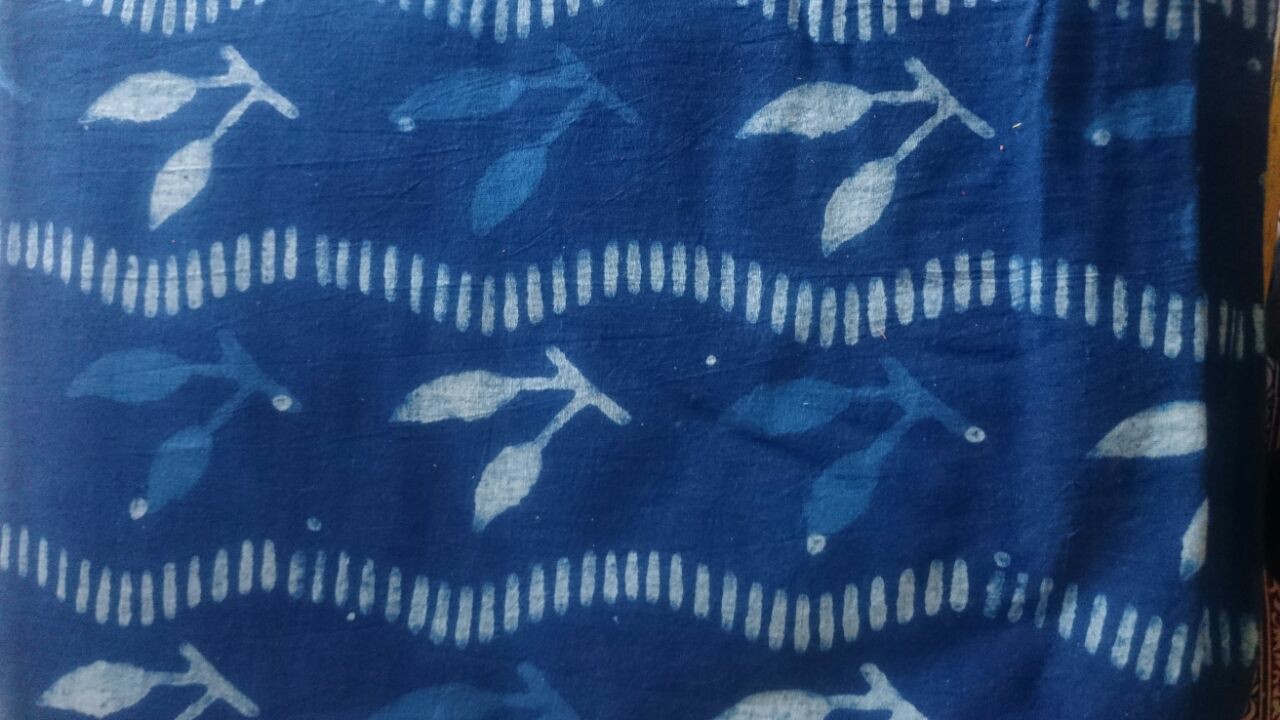
This blog explains about some of the different types of hand block prints followed in India:
Bagh Print:
Bagh print is one of the famous hand blocks printing art of India. Practiced in rural and tribal village “Bagh” situated at the banks of Baghini River. Bagh is a village of Dhar district in Madhya Pradesh. Minerals found in the Baghini river water gave natural color more vibrancy and increase its fastness.
Dabu print:
Dabu Print is one of the resist printing styles of hand block printing practiced in various parts of India. A paste comprises of flour, black soil and lime used to print indigo blue dye. The wooden blocks are used to print on clothes. There is two to three colors available in natural dye in Dabu are Indigo, green and yellow.
Nandana Print:
Nandana Print is one of its unique and complex styles of hand block printing. Today only practiced by local “Chippa” community in the Jawad village of Madhya Pradesh. To print a buta (flower) design it requires four different blocks under Nandana style of printing. This process is very time consuming. 4 buta-buti designs available in Nandana style of printing. It is popular among the art and craft lovers for its complex yet eye catching designs and color combinations.
Tarapur Print:
Tarapur village practices this unique art. It is a unique combination of vegetable alizarin hand block printing and Dabu resist hand block printing. In this technique fabric first printed with syahi begar (Vegetable Red & black) than dyed with Indigo for blue shade. Indigo dyed fabric again dyed with pomegranate peel dye to get green and yellow shade.
Ajrakh Print:
Ajrakh print is one of the complex and one of the oldest art. Some years ago it was mainly practiced in Sindh region of Pakistan by Khatri (Chippa) community. It is widely practiced in Gujarat region in India and some parts of Rajasthan. Ajrakh is one of the most complex, and arduous art containing 20 or more steps in preparing final product. It is a kind of resist printing traditionally using geometrical designs with natural colors on variety of natural fiber based fabrics.
Discover more from Sriethnics
Subscribe to get the latest posts sent to your email.